Traditional dentures rest on the gums, while implant-supported dentures are anchored to dental implants for greater stability. Learn about the key differences in stability, cost, treatment time, maintenance, jawbone support, and candidacy.
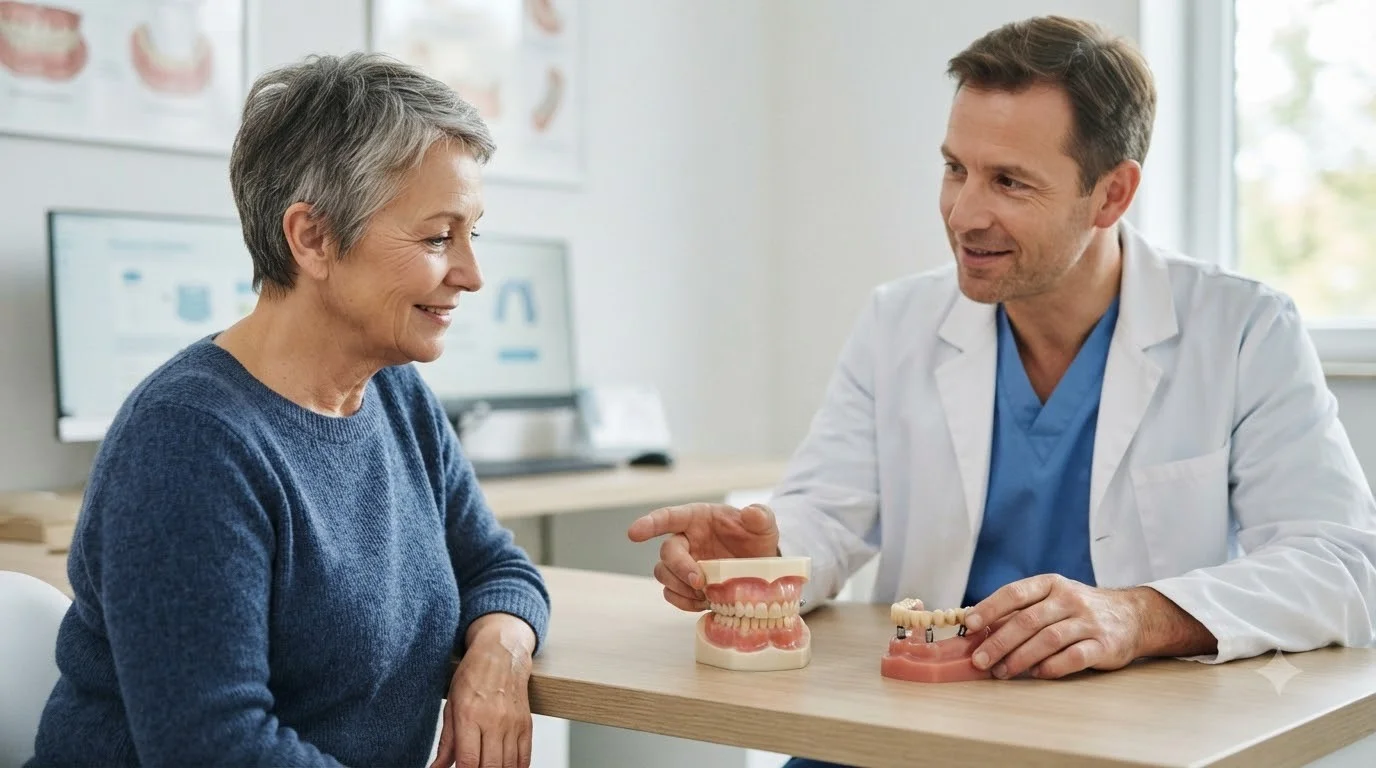
Traditional dentures rest on the gums and provide a removable tooth replacement option.
Implant-supported dentures use dental implants to provide additional stability.
Implant-supported dentures require surgery and generally have a higher initial investment.
Traditional dentures may require adjustments as the gums and jawbone change over time.
The right option depends on your oral health, jawbone condition, preferences, budget, and treatment goals.
Losing most or all of your teeth can affect how you eat, speak, smile, and feel about your appearance. Traditional dentures and implant-supported dentures are two options for replacing missing teeth, but they differ in how they are supported and how they function.
Traditional dentures rest on the gums and are removable, while implant-supported dentures attach to dental implants placed in the jawbone for additional stability. The right option depends on factors such as oral health, jawbone condition, treatment preferences, budget, and long-term goals.
Traditional dentures are removable dental appliances that replace missing teeth and restore your smile's appearance and function. Complete dentures can replace all the natural teeth in the upper or lower jaw and are custom-made for a comfortable fit and natural look.
The denture rests directly on the gums. With proper care and regular dental adjustments, traditional dentures can help improve chewing, speech, and confidence after tooth loss. They are also a non-surgical tooth replacement option, which can make them suitable for people who do not want or cannot pursue implant treatment.
Traditional dentures may need adjustments over time because the shape of the gums and jawbone can change after tooth loss.
Implant-supported dentures are a type of denture that uses dental implants for additional support. Instead of relying entirely on the gums for stability, the denture attaches to implants placed in the jawbone.
This design can provide greater stability during everyday activities such as eating and speaking. Because implants are placed into the jawbone, they also provide support that traditional removable dentures do not provide.
Implant-supported dentures require implant surgery and a healing period before the final restoration can be completed. They also generally involve a higher initial investment than traditional dentures.
The main difference between these two tooth replacement options is how the denture is supported.
Feature | Traditional Dentures | Implant-Supported Dentures |
Support | Rest on the gums | Supported by dental implants |
Removable | Yes | Depends on the denture design |
Stability | May move during eating or speaking | Provides additional stability and less movement |
Surgery | Not required | Required for implant placement |
Initial Investment | Generally lower | Generally higher |
Jawbone Support | Does not replace tooth roots | Implants provide support within the jawbone |
Treatment Time | Generally shorter | Generally longer, includes implant healing |
Adjustments | May be needed as the mouth changes | Requires monitoring of implants and restoration |
Maintenance | Daily denture cleaning | Denture and implant-area care |
Neither option is automatically right for every patient. A dental evaluation can help determine which treatment fits your oral health and personal needs.
Stability is one of the most noticeable differences between traditional and implant-supported dentures.
Traditional dentures rest directly on the gums. While a properly fitted denture can feel comfortable and secure, movement can sometimes occur during eating or speaking. Regular adjustments can help maintain the fit as the mouth changes over time.
Implant-supported dentures are anchored to dental implants, giving the restoration additional support. This can reduce movement and make everyday activities more comfortable for suitable patients.
For people who are particularly concerned about denture movement, implant-supported dentures may be an option worth discussing with a dentist.
Tooth loss can lead to changes in the jawbone over time. Traditional dentures replace the visible teeth, but do not replace the natural tooth roots. Without teeth, the jawbone can resorb, which is why occasional adjustments may be needed as the bone goes away.
Implant-supported dentures use dental implants placed in the jawbone. The implants provide support within the bone and can help preserve bone around the implant sites. This typically leads to fewer adjustments after the initial placement of the implants.
However, existing bone condition is an important consideration before implant treatment. A dental professional needs to evaluate the jawbone and overall oral health to determine whether implant-supported dentures are appropriate.
Both traditional dentures and implant-supported dentures require regular care.
Traditional dentures should be removed and rinsed after eating and cleaned daily with a soft brush and appropriate denture cleaner (not toothpaste). The gums and tongue should also be cleaned regularly. Dentures should be stored or soaked according to your dentist's instructions.
Implant-supported dentures also require daily cleaning. In addition to cleaning the denture, patients need to maintain the areas around the implants and attachments. Regular dental checkups are important for checking the fit, condition of the restoration, and health of the surrounding tissues.
Your dentist can provide specific instructions based on the type of denture you receive.
Choosing between traditional dentures and implant-supported dentures involves more than comparing features. Consider how important stability is to you, whether you are comfortable with implant surgery, your available budget, the condition of your jawbone, and the type of daily care you prefer.
Traditional dentures can provide a removable and non-surgical solution for replacing missing teeth. Implant-supported dentures provide additional support through dental implants and may be appropriate for patients seeking greater stability.
Eversmile Dental provides personalized denture care focused on restoring comfort, function, and confidence after tooth loss. The team can evaluate your needs, explain available tooth replacement options, and help you understand what to expect throughout the denture process.
Whether you are considering traditional dentures or exploring implant-supported dentures, a personalized evaluation can help you understand which option may fit your oral health and treatment goals.
Choosing between traditional and implant-supported dentures depends on your oral health, jawbone condition, treatment preferences, budget, and goals for tooth replacement. Traditional dentures offer a removable, non-surgical option, while implant-supported dentures use dental implants to provide additional stability.
A professional evaluation can help you understand your options and choose a denture solution that supports comfortable eating, speaking, and everyday confidence. Eversmile Dental can help you explore the available options and plan care based on your individual needs.


Key TakeawaysTooth sensitivity to cold can have several causes, including exposed dentin, enamel wea...
Many parents think baby teeth do not require much attention because they eventually fall out. Howeve...
When you have a damaged, discolored, chipped, worn, or missing tooth, you may come across two common...
Losing teeth can affect more than your smile. Missing teeth may make chewing and speaking more diffi...
Key TakeawaysWhite spots can have several causes, including enamel changes, fluorosis, and early dec...
Key TakeawaysA chip usually affects the enamel, while a crack can extend deeper into the tooth.Pain,...