
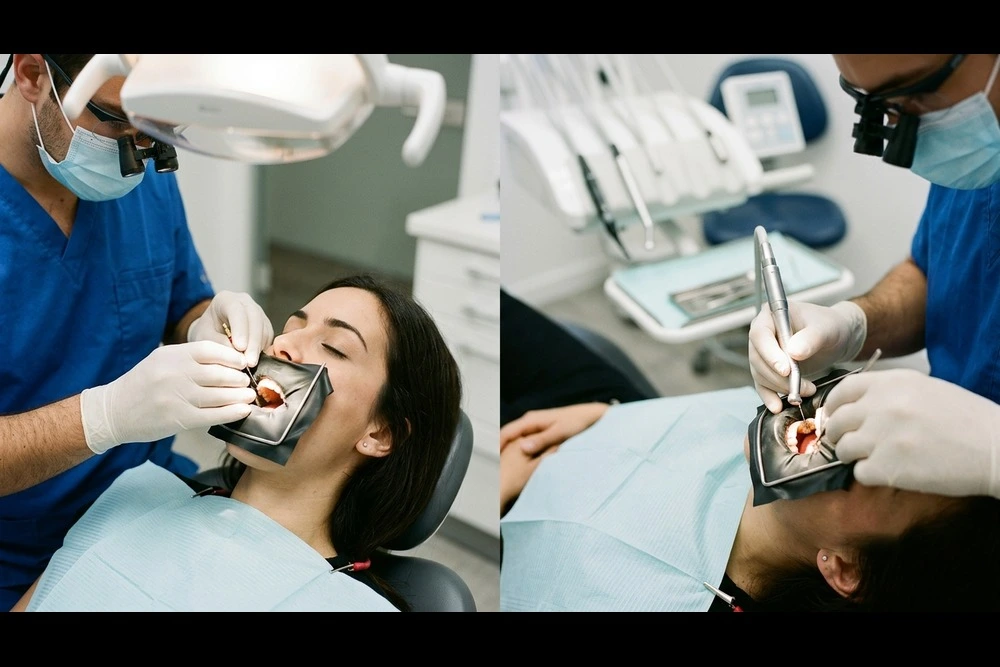
Root canal treatment saves infected teeth by removing damaged pulp and sealing the canals.
Front teeth usually have one root, making treatment simpler and quicker than molars.
Molars have multiple roots and canals, so treatment is often more complex and may take longer.
Most molars require a dental crown after a root canal, while front teeth may not always need one.
Recovery is similar for both tooth types, with most patients returning to normal activities within a day.
Early diagnosis and timely root canal therapy help relieve pain, prevent complications, and preserve your natural smile.
Root canal treatment follows the same goal regardless of the tooth: removing infected pulp, cleaning the canals, and sealing the tooth to prevent further infection. However, the procedure can differ depending on whether the affected tooth is a front tooth or a molar. The number of roots, tooth anatomy, treatment time, and restoration needs all vary between tooth types.
According to the American Association of Endodontists, more than 15 million root canals are performed every year in the United States. If you have been told you may need root canal therapy, understanding how treatment differs between front teeth and molars can help you feel more prepared and confident going into your appointment.
Root canal treatment removes infected or inflamed pulp tissue from inside the tooth. The pulp contains nerves and blood vessels, and when it becomes infected, it causes significant pain and can lead to serious complications if left untreated.
Root canal therapy is typically recommended when:
Deep decay has reached the inner pulp of the tooth
A crack or fracture has allowed bacteria to enter
A previous restoration has failed, and infection has developed
Trauma to the tooth has caused pulp damage
Saving the natural tooth is almost always the preferred outcome. Root canal treatment allows the tooth to remain in place, preserving your bite, jawbone health, and the alignment of surrounding teeth.
The main reason root canal treatment varies between front teeth and molars comes down to anatomy. Different types of teeth have different root structures, which affects the complexity and duration of the root canal procedure.
Front teeth, including incisors and canines, typically have a single root and a single canal. They are positioned at the front of the mouth, which makes them easier to access and visualise during treatment. They also experience far less biting force compared to back teeth, which simplifies both the procedure and the restoration that follows.
Molars are the large flat teeth at the back of the mouth responsible for most chewing pressure. A molar root canal is more involved because molars typically have two to four roots and three to four canals, sometimes more. This additional complexity means the procedure takes longer and requires greater precision.
Feature | Front Teeth | Molars |
Number of roots | Usually 1 | 2 to 4 |
Number of canals | Usually 1 | 3 to 4 or more |
Procedure complexity | Lower | Higher |
Treatment time | Shorter | Longer |
Crown usually needed | Sometimes | Often recommended |
Chewing pressure | Low | High |
Molar root canals are more technically demanding than front tooth root canals, but this does not mean they are more painful or risky for the patient. The added complexity comes from the tooth's anatomy. Molars tend to have curved roots, multiple canals that are sometimes narrow or unusually shaped, and limited visibility due to their position at the back of the mouth.
Each canal must be carefully identified, cleaned, and sealed to ensure the infection is fully removed. With an experienced dental team and modern diagnostic tools, molar root canal therapy is a routine and highly predictable procedure.
Whether a crown is needed after root canal treatment depends on the tooth being treated and how much healthy structure remains.
Front teeth experience relatively low biting pressure, so a crown is not always necessary. If the tooth has sufficient healthy structure remaining, your dentist may restore it with a filling or bonding. If the tooth is weakened or significantly discolored, a crown or internal whitening may be recommended.
Molars almost always require a dental crown after root canal therapy. Because they absorb significant chewing forces every day, an unprotected molar is at high risk of fracturing after the pulp has been removed. A crown protects the tooth, restores full chewing function, and significantly extends the lifespan of the treated tooth.
Recovery from root canal therapy is generally straightforward for both front teeth and molars. Most patients return to normal activities the same day or the day after treatment.
Avoid chewing on the treated tooth until it has been fully restored
Take any recommended medications as directed
Maintain good oral hygiene, including gentle brushing and flossing
Attend all follow-up appointments so your dentist can monitor healing
Contact your dentist if you experience increasing pain or swelling
When you need root canal treatment, choosing an experienced dental team can make a significant difference in both your comfort and the long-term success of your care. At EverSmile Dental in Goldsboro, NC, we combine modern technology with a patient-first approach to provide precise, comfortable root canal therapy for both front teeth and molars.
Our team uses digital imaging and advanced diagnostic tools to accurately identify the source of infection and plan treatment with confidence. Whether your tooth has a simple single canal or a more complex molar root system, we focus on preserving your natural tooth while making your experience as stress-free as possible.
Comprehensive diagnosis and personalized treatment planning
Modern technology for accurate and efficient root canal therapy
Gentle, compassionate care focused on patient comfort
Restorative solutions, including dental crowns when needed, all under one roof
Convenient scheduling and ongoing support throughout your recovery
If you're experiencing persistent tooth pain or have been told you need a root canal, our experienced team is here to help you restore your oral health with trusted, high-quality care.
Root canal treatment follows the same principles whether the affected tooth is a front tooth or a molar. The differences come down to tooth anatomy, procedure complexity, treatment time, and restoration needs. In both cases, root canal therapy is a safe and effective way to save a natural tooth and protect your long-term oral health.
If you are experiencing persistent tooth pain or have been told you may need a root canal, the team at EverSmile Dental in Goldsboro, NC is here to help with personalised, comfortable care tailored to your specific needs. Early treatment almost always leads to better outcomes, so do not wait for the problem to worsen.
Book your appointment with EverSmile Dental today and take the first step toward lasting relief and a healthier smile.


Tooth erosion and tooth decay can both damage your teeth, but they are not the same condition. Tooth...
Losing most or all of your teeth can affect how you eat, speak, smile, and feel about your appearanc...
A sip of cold water or a bite of ice cream should not make your teeth hurt. However, many people fee...
Many parents think baby teeth do not require much attention because they eventually fall out. Howeve...
When you have a damaged, discolored, chipped, worn, or missing tooth, you may come across two common...
Losing teeth can affect more than your smile. Missing teeth may make chewing and speaking more diffi...