Losing teeth can affect more than your smile. Missing teeth may make chewing and speaking more difficult and can affect confidence in everyday situations. Fortunately, dentures provide a removable way to replace missing teeth and restore important oral functions.
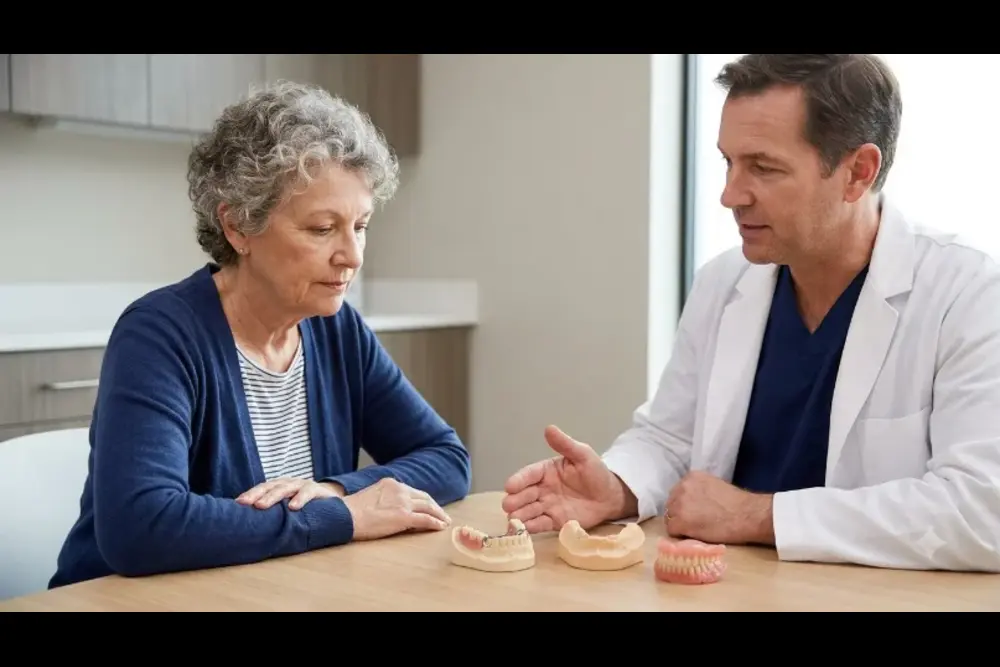
Losing teeth can affect more than your smile. Missing teeth may make chewing and speaking more difficult and can affect confidence in everyday situations. Fortunately, dentures provide a removable way to replace missing teeth and restore important oral functions.
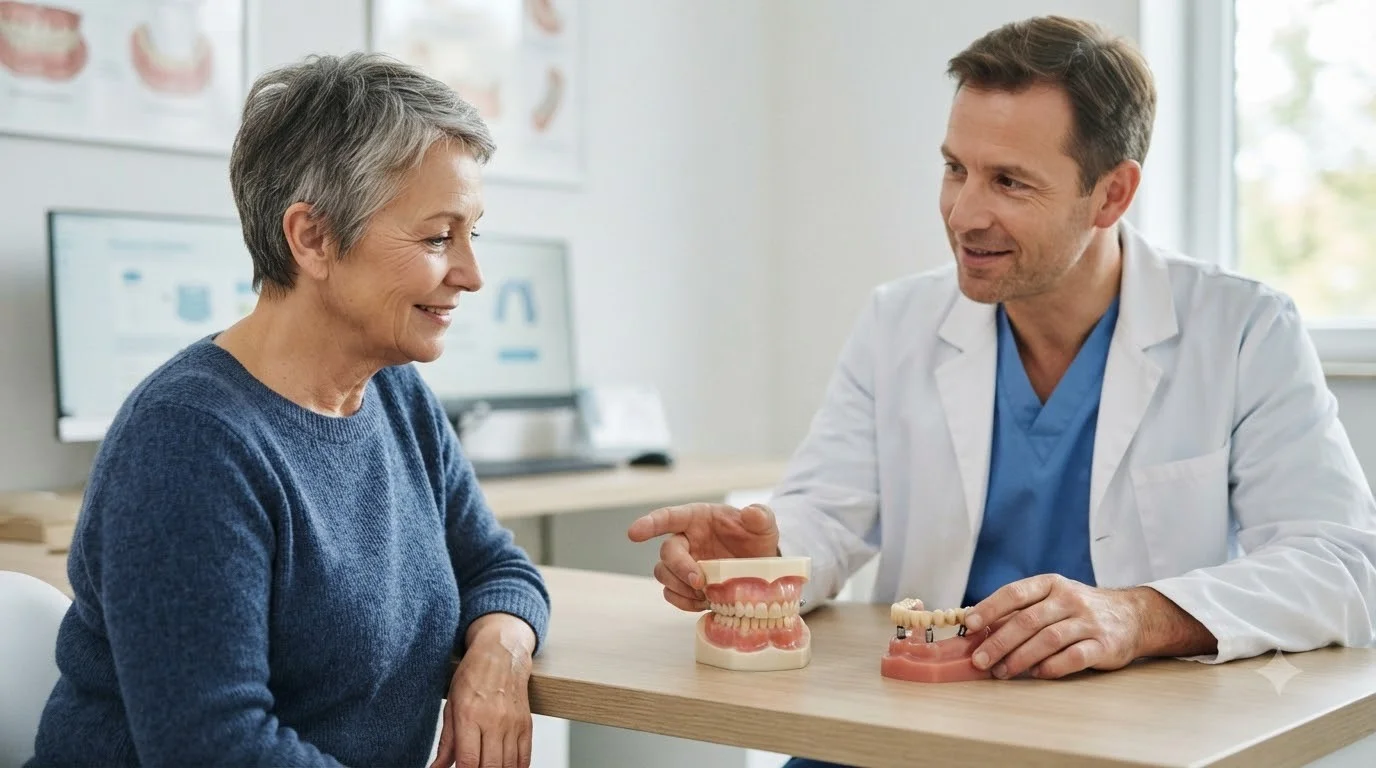
The two common options are full dentures and partial dentures. Full dentures replace all natural teeth in an upper or lower arch, while partial dentures replace one or more missing teeth when healthy natural teeth remain. The right option depends on the number and condition of your remaining teeth, gum health, treatment goals, comfort, and budget.
Full dentures, also called complete dentures, are removable dental appliances designed to replace all missing teeth in the upper jaw, lower jaw, or both. They are custom-made to resemble natural teeth and gums while helping restore chewing, speech, facial support, and smile appearance.
Full dentures may be recommended when all teeth in an arch are missing or when the remaining teeth are no longer healthy enough to preserve. Causes can include extensive decay, gum disease, trauma, or teeth that are considered unsalvageable.
Replace all missing teeth in an arch
Restore chewing and speaking ability
Improve the appearance of the smile
Provide facial support
Offer a non-surgical tooth replacement option
Can be customized for a natural-looking appearance
The denture process generally includes an examination, impressions, bite registration, tooth selection, fitting, and adjustments. If extractions are necessary, the timing of the final denture depends on healing and individual treatment needs.
Partial dentures are removable appliances used when one or more teeth are missing but healthy natural teeth remain. They fill spaces created by missing teeth and use the remaining teeth and surrounding tissues for support.
Depending on the patient's needs, partial dentures may be made from acrylic, metal, or flexible resin. They can be designed to match the color and shape of the existing teeth for a more natural appearance.
Replace one or several missing teeth
Preserve the appearance of the smile
Help restore chewing and speech
Reduce unwanted movement of remaining teeth
Provide a removable alternative to fixed restorations
Can be customized for comfort and appearance
Partial dentures may be especially useful for patients who want to replace missing teeth without choosing a more invasive treatment such as dental implants or a bridge.
Understanding the differences can make your treatment decision easier.
Factor | Full Dentures | Partial Dentures |
Teeth replaced | All teeth in an upper or lower arch | One or more missing teeth |
Natural teeth remaining | No healthy teeth needed in the treated arch | Healthy natural teeth remain |
Support | Rests primarily on gums and oral structures | Supported by remaining teeth and gums |
Main purpose | Complete tooth replacement | Replacement of selected missing teeth |
Appearance | Designed to recreate an entire arch | Designed to blend with existing teeth |
Cleaning | Removed for cleaning and care | Removed for cleaning and care |
Adjustment period | May take several weeks | Often shorter, depending on the case |
Future adjustments | May require future relining or replacement | May require adjustments as the mouth changes |
Both options can improve chewing, speech, appearance, and confidence. Neither is automatically better for every patient. The most appropriate choice depends on the condition of the mouth and the number of teeth that can be successfully retained.
Full dentures may be considered when an entire arch has lost its natural teeth or when the remaining teeth cannot be predictably restored.
A dentist may discuss complete dentures when:
Most or all teeth in an arch are missing
Remaining teeth have extensive decay or structural damage
Advanced gum disease has affected tooth stability
Multiple teeth require extraction
Restoring individual teeth is no longer predictable
A patient wants a removable, non-surgical replacement option
The goal is not simply to replace teeth, but to restore function and provide a comfortable, practical solution for daily life.
Partial dentures may be appropriate when several teeth are missing, but healthy natural teeth remain.
They can be considered when:
Some natural teeth remain strong and stable
One or more gaps need to be restored
The patient wants to retain existing teeth
A removable replacement is preferred
The patient wants an alternative to implants or fixed bridges
A proper evaluation is important because the remaining teeth need to provide adequate support. Your dentist will also consider gum health, tooth position, bite, and overall oral condition before recommending a partial denture.
The number of missing teeth is only one part of the decision. Your dentist may consider several factors before recommending full or partial dentures.
If healthy natural teeth can be preserved, a partial denture may be an option. If remaining teeth are extensively damaged or cannot provide reliable support, full dentures may then be considered.
Healthy supporting tissues are important for partial or denture comfort and function. Your dentist will perform an examination and appropriate imaging to evaluate your oral condition and determine the best treatment.
Both full and partial dentures require an adjustment period. Proper fitting and professional adjustments can improve comfort and function.
Your eating habits, speech needs, appearance preferences, willingness to remove dentures for cleaning, and long-term goals can all influence the recommendation.
The initial cost is only one consideration. Future adjustments, relining, replacement, and alternative treatments may also affect the overall investment.
Dentures do not last indefinitely. Changes in the gums, jawbone, remaining teeth, and denture materials can affect fit and function over time.
EverSmile Dental's complete denture information states that dentures typically last about 5 to 7 years with proper care, while the partial denture service notes that partial dentures can typically last 5 to 10 years when properly maintained, although individual results vary.
Regular dental visits allow your dentist to monitor your oral health and determine whether your dentures need adjustment, relining, repair, or replacement.
No. Depending on your oral health and treatment goals, other options may include dental implants or dental bridges.
Dental implants can replace individual teeth or provide support for implant-supported dentures. Bridges are fixed restorations that use neighboring teeth for support. Each option has different advantages, requirements, costs, and maintenance considerations.
A dental evaluation can help determine whether full dentures, partial dentures, implants, bridges, or another treatment is appropriate for your situation.
Choosing dentures is a personal decision, and patients benefit from having their options explained clearly before treatment begins.
At EverSmile Dental, denture care is part of a broader approach to restorative and family dentistry. Our practice provides complete dentures for patients who need to replace all teeth in an arch and partial dentures for patients who still have healthy natural teeth. The team focuses on custom fitting, comfort, appearance, and helping patients understand denture care and adjustment.
An evaluation can help you understand which option fits your current oral health, lifestyle, and long-term goals.
The choice between full and partial dentures depends primarily on how many teeth are missing and whether any healthy natural teeth remain. Full dentures replace an entire upper or lower arch, while partial dentures fill selected gaps while using remaining teeth for support.
The best option should be determined after evaluating your teeth, gums, bite, oral health, lifestyle, and treatment goals. With proper fitting, regular care, and ongoing dental visits, dentures can help restore chewing, speech, appearance, and confidence.
If you are considering full or partial dentures, schedule an evaluation with EverSmile Dental to discuss your options and find a solution suited to your smile and long-term oral health.


Tooth erosion and tooth decay can both damage your teeth, but they are not the same condition. Tooth...
Losing most or all of your teeth can affect how you eat, speak, smile, and feel about your appearanc...
A sip of cold water or a bite of ice cream should not make your teeth hurt. However, many people fee...
Many parents think baby teeth do not require much attention because they eventually fall out. Howeve...
When you have a damaged, discolored, chipped, worn, or missing tooth, you may come across two common...
Key TakeawaysWhite spots can have several causes, including enamel changes, fluorosis, and early dec...